
Performing Arts Medicine Resources
Take care of the instrument that matters most — yourself. Explore practical resources to help you care for your body and mind, on stage and off.
Last updated on 21 September 2026
Performing arts medicine brings health and artistic practice together, helping artists better understand and care for their bodies and minds. It supports a more sustainable approach to making work — one that can be carried from rehearsal room to stage, over time.
Mental Well-being and Performance
The demands of an artistic practice can affect our mental well-being in different ways — from managing the nerves and pressure that come with performing, to navigating stress, self-doubt and the emotional demands of creative work.
Explore the infographics below for practical strategies to support your mental well-being, manage performance anxiety and build confidence and resilience over time.
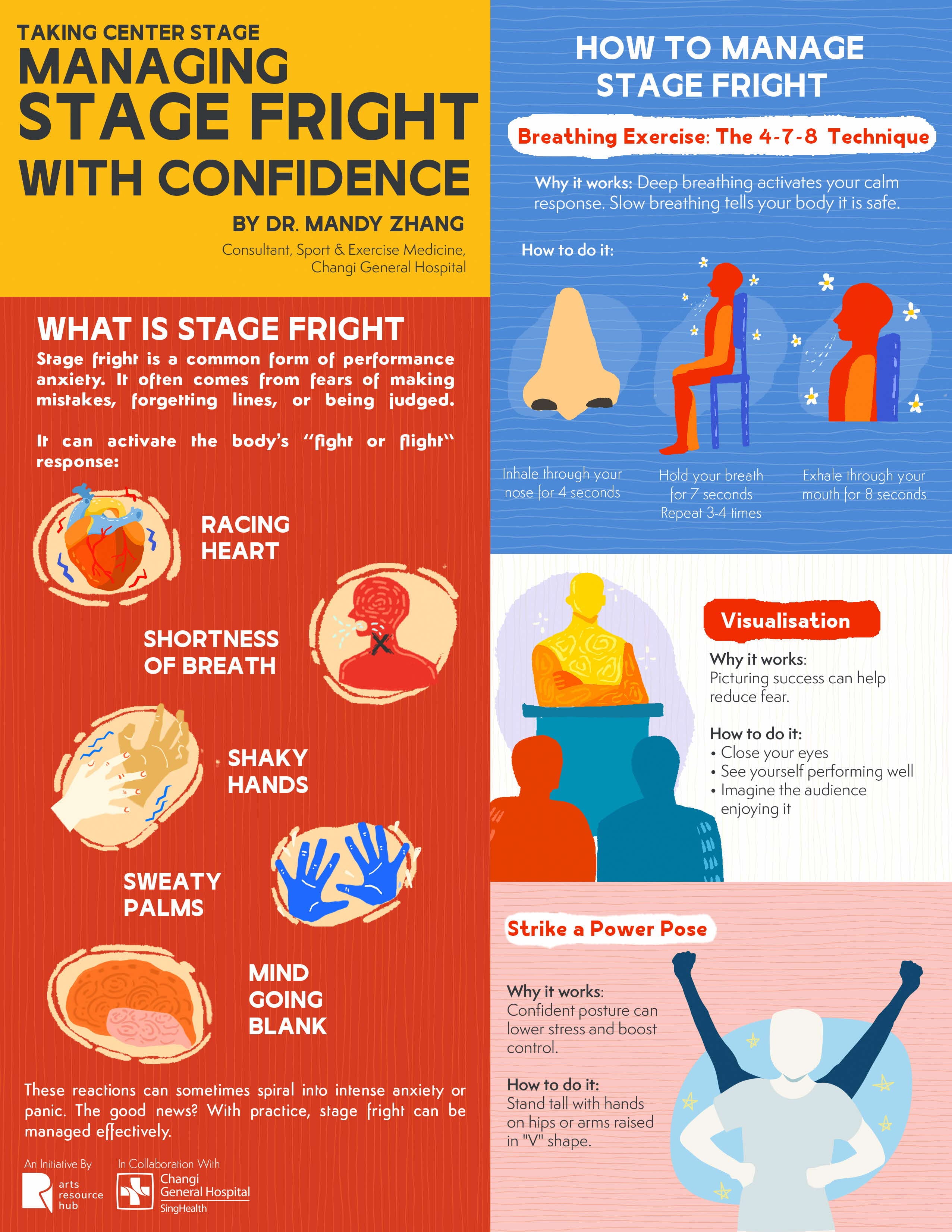
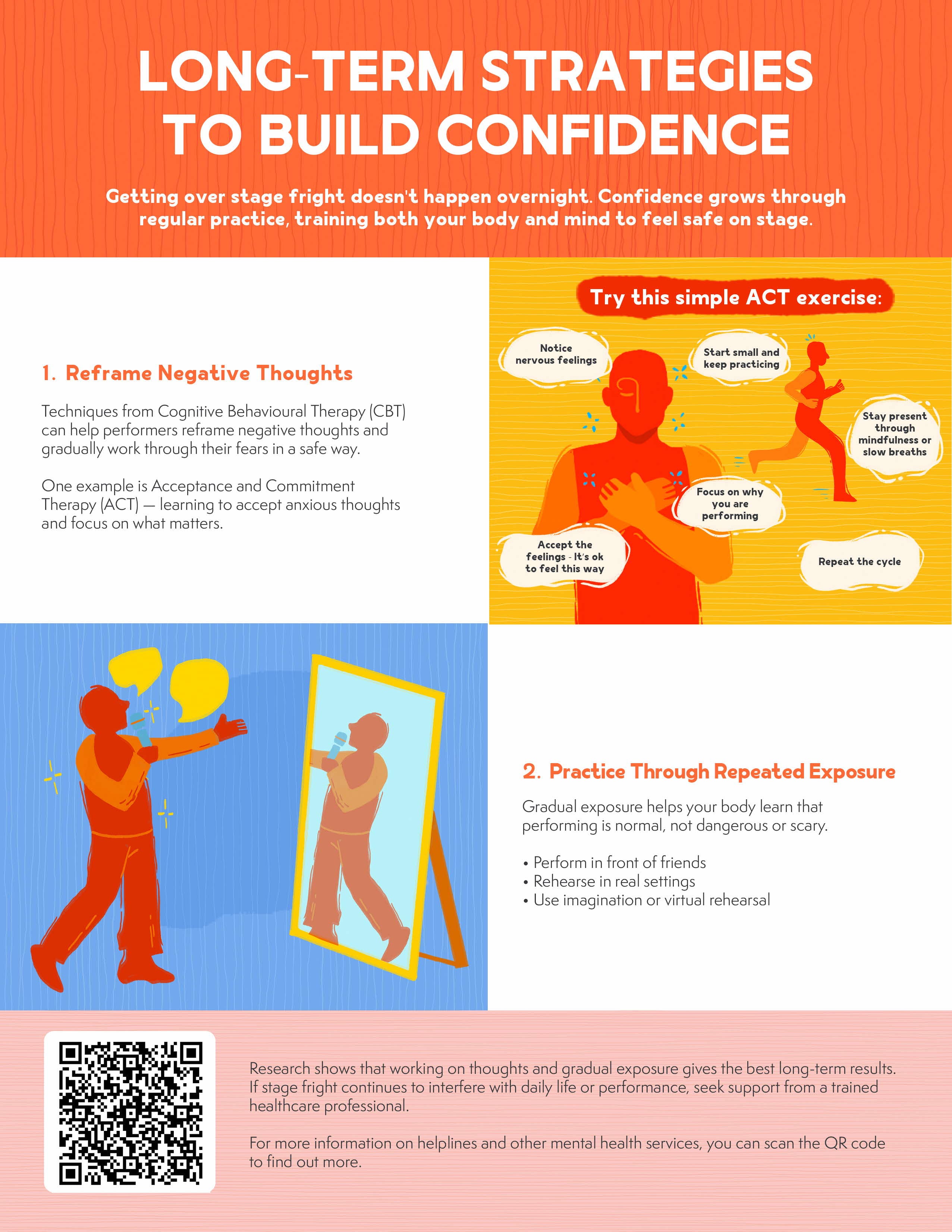
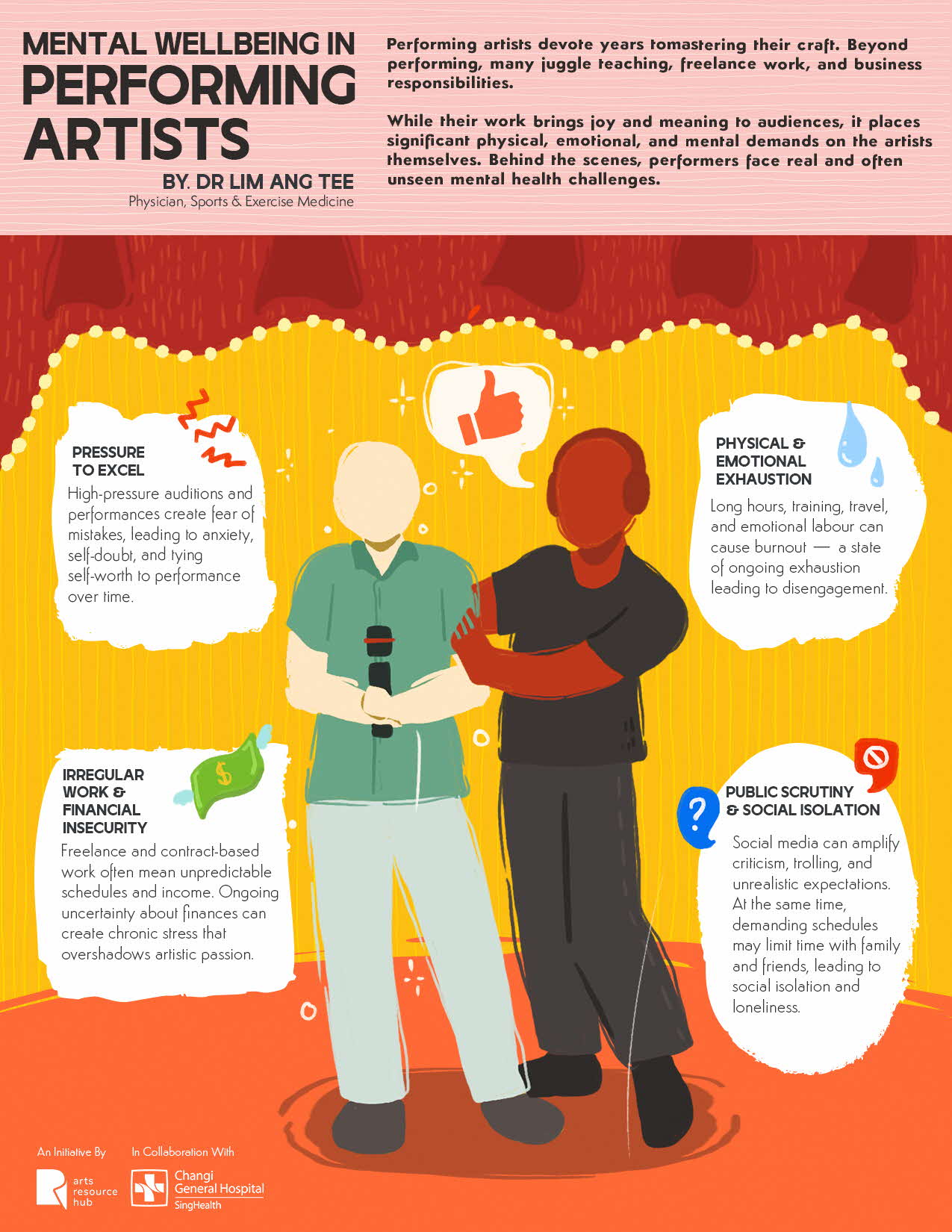
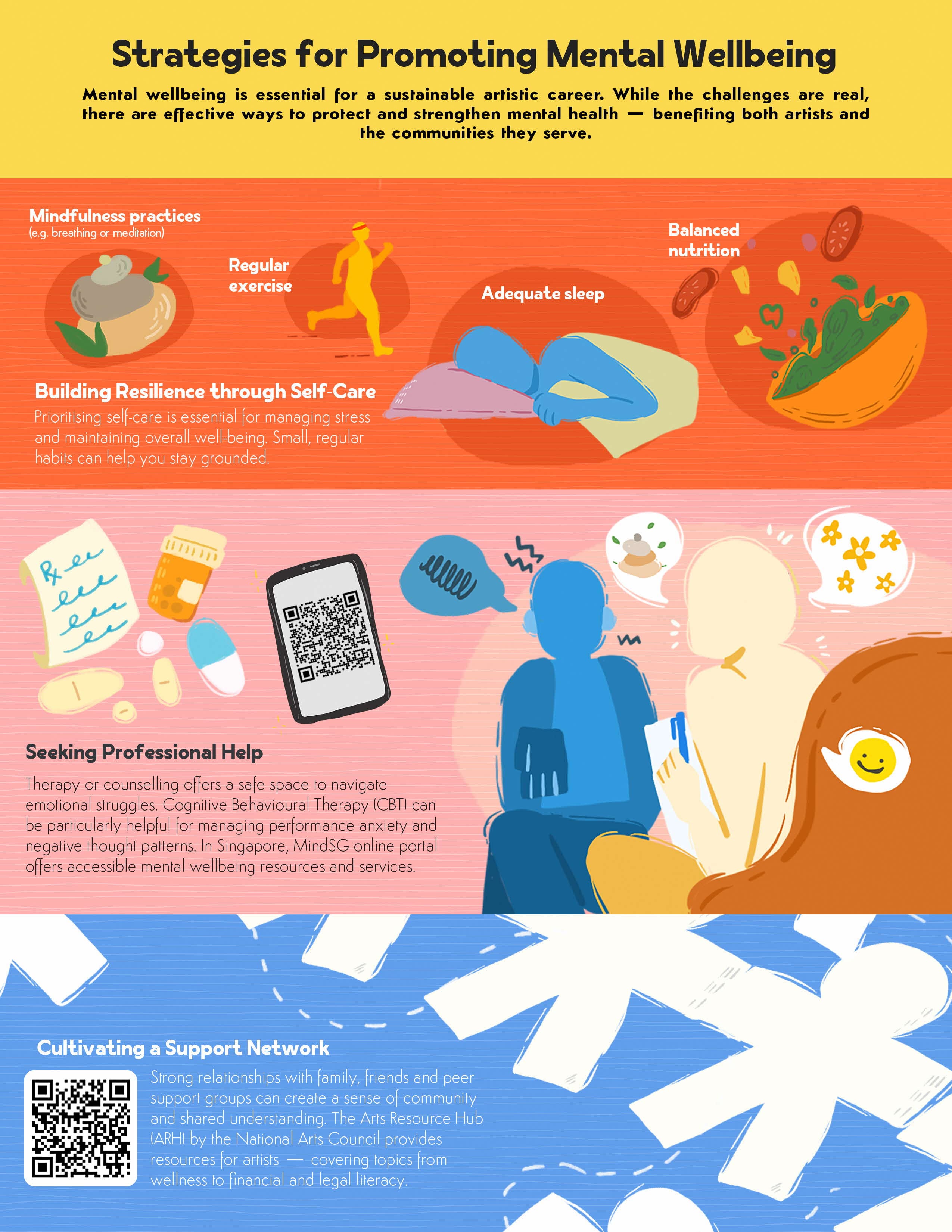
The above resources are developed in partnership with healthcare professionals from Changi General Hospital, this series aims to make performing arts medicine knowledge more accessible and relevant to everyday artistic practice.
Caring for Your Voice
For those who rely heavily on their voice — such as singers, performers, teachers and arts educators — regular vocal demands can take a toll over time. Understanding the signs of vocal strain and developing good vocal habits can help you care for your voice and use it sustainably.
Explore the resources below for practical guidance on recognising signs of vocal strain, managing vocal demands and building healthy vocal habits.
How do you know when your voice is not healthy?
If you answer "yes" to any of the following questions, you may have a voice problem:
Has your voice become hoarse or raspy?
Have you lost your ability to hit some high notes when singing?
Does your voice suddenly sound deeper?
Does your throat often feel raw, achy, or strained?
Has it become an effort to talk?
Do you find yourself repeatedly clearing your throat?
If you think you have a voice problem, consult a doctor to determine the underlying cause.
Source: National Institute on Deafness and Other Communication Disorders (NIH), USA (opens in new tab)
Managing Vocal Demand
Quick voice screener: Voice Handicap Index VHI-10 Calculator (opens in new tab)
The Voice Handicap Index (VHI-10) is an online self-assessment tool that helps vocalists quickly screen for vocal difficulties and track changes in their vocal health over time. It offers a simple snapshot of how voice issues may be affecting your ability to perform, communicate, and go about daily life.
*Please note that this web tool is not a diagnostic instrument and does not replace a professional clinical assessment. If you are experiencing any vocal abnormalities or concerns that persist for more than two weeks, we encourage you to consult a specialist for evaluation.
Healthy habits to take care of your voice
Stay hydrated:
Drink plenty of water, especially when exercising.
If you drink caffeinated beverages or alcohol, balance your intake with plenty of water.
Take vocal naps—rest your voice throughout the day.
Use a humidifier in your home. This is especially important in dry climates. Thirty percent humidity is recommended.
Avoid or limit use of medications that may dry out the vocal folds, including some common cold and allergy medications. If you have voice problems, ask your doctor which medications would be safest for you to use.
Maintain a healthy lifestyle and diet:
Don't smoke, and avoid second-hand smoke. Smoke irritates the vocal folds.
Avoid eating spicy foods. Spicy foods can cause stomach acid to move into the throat or esophagus, causing heartburn or GERD.
Include plenty of whole grains, fruits, and vegetables in your diet. These foods contain vitamins A, E, and C. They also help keep the mucus membranes that line the throat healthy.
Get enough rest. Physical fatigue has a negative effect on voice.
Exercise regularly. Exercise increases stamina and muscle tone. This helps provide good posture and breathing, which are necessary for proper speaking.
Avoid mouthwash or gargles that contain alcohol or irritating chemicals.
Use your voice wisely:
Try not to overuse your voice. Avoid speaking or singing when your voice is hoarse or tired.
Rest your voice when you are sick. Illness puts extra stress on your voice.
Avoid using the extremes of your vocal range, such as screaming or whispering. Talking too loudly and too softly can both stress your voice.
Practice good breathing techniques when singing or talking. Support your voice with deep breaths from the chest, and don't rely on your throat alone.
Consider using a microphone when appropriate. In relatively static environments such as exhibit areas, classrooms, or exercise rooms, a lightweight microphone and an amplifier-speaker system can be of great help.
Avoid talking in noisy places. Trying to talk above noise causes strain on the voice.
Source: National Institute on Deafness and Other Communication Disorders (NIH), USA (opens in new tab)
Visualisation Techniques for Performers Guide
Visualisation Techniques for Performers BAPAM [PDF, 2.06 MB] (opens in new tab)
Why is it this relevant for Performing Artists?
For performing artists, visualisation is a powerful mental tool that goes beyond simply "thinking positively." It helps build self-confidence, sharpen focus, and reduce performance anxiety — all of which are critical to delivering your best on stage.
Visualisation is also particularly valuable when physical practice is not possible. Whether you are fatigued after an intensive rehearsal period, recovering from an injury, or simply away from your instrument or studio, visualisation allows you to continue rehearsing mentally, keeping your skills sharp and your goals front of mind.
Source: British Association for Performing Arts Medicine (BAPAM)
Need More Support?
Explore clinics and specialist directories dedicated to Performing Arts Medicine for more tips, guidance, and support for your practice
Performing Arts Medicine Support Directories
Looking to learn more? Check out these resources for more tips, guidance, and support for your practice:
Changi General Hospital's Sports & Exercise Medicine Centre (opens in new tab) operates a dedicated Performing Arts Medicine clinic with medical professionals trained in both sports medicine and performing arts. They specialise in movement analysis and customised treatment plans designed specifically for performance-related injuries.
Sports Medicine Association Singapore (SMAS) Resource Network List (opens in new tab) is a directory of PAM specialists available for consultation — including physicians, physiotherapists, clinical exercise physiologists, hand therapists, educators, and sports scientists/coaches.
The Musicians' Clinic at Yong Siew Toh Conservatory of Music (opens in new tab) focuses specifically on addressing the medical needs of musicians and music students. The clinic provides specialised care for performance-related injuries and offers preventive education, combining medical expertise with deep understanding of musicians' specific needs.
Note: The information and resources on this page are provided for general reference only and do not constitute medical advice. Please consult a qualified medical professional for advice specific to your circumstances.