What's It Like to Work as an SEP?
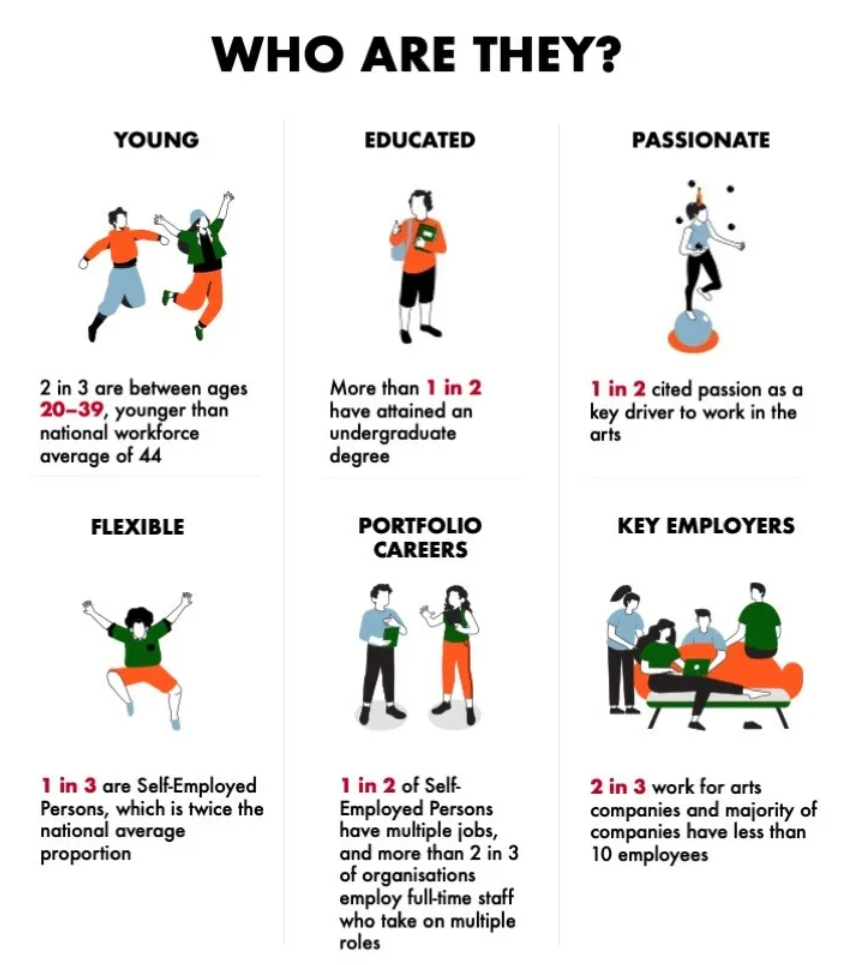
1 in 3 professionals in the arts operate as Self-Employed Persons (SEPs). This proportion of SEPs is higher than the national average, which stands at less than 1 in 5.
Last updated on 26 August 2026
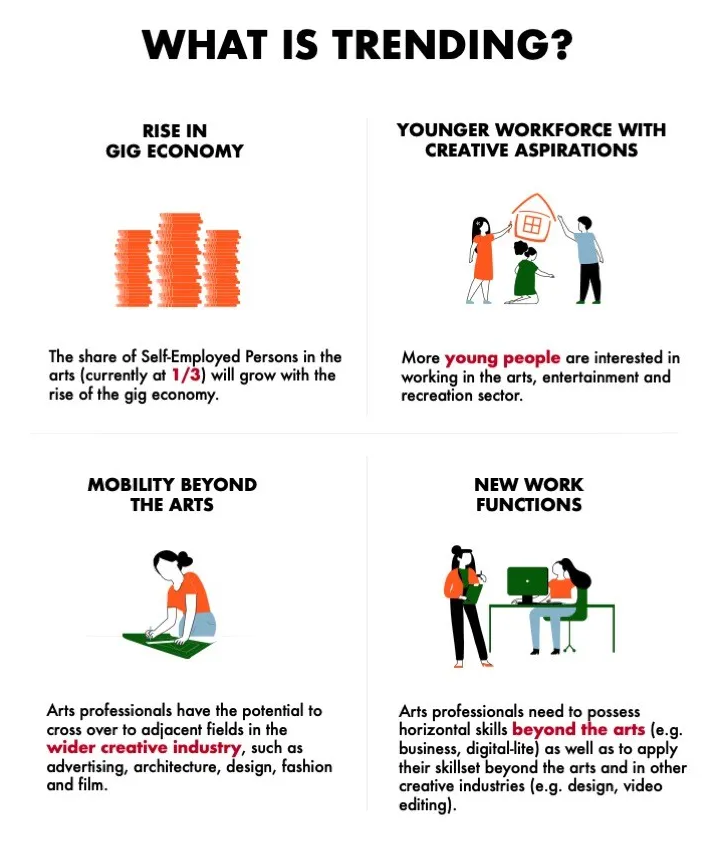
Gig work accounts for the main livelihood of many professionals in the arts and wider creative industries and is expected to rise on the back of a growing gig economy.
SEPs have the freedom and responsibility of shaping their career, one that suits their personal interests and professional needs.
Benefits & Drawbacks
Benefits | Drawbacks |
|---|---|
|
|
Work in the Arts
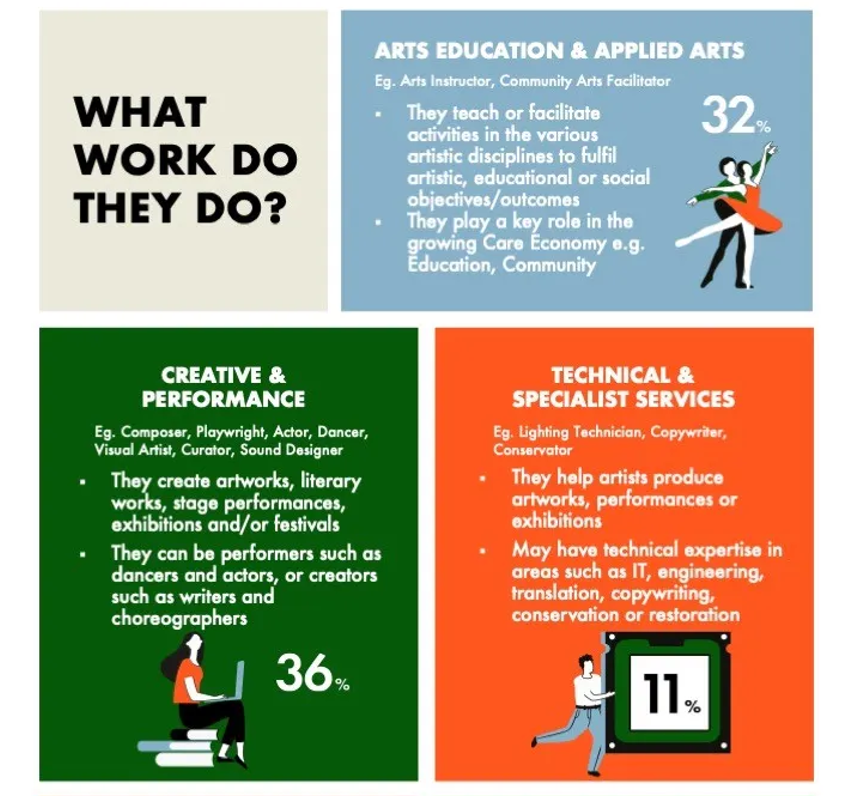
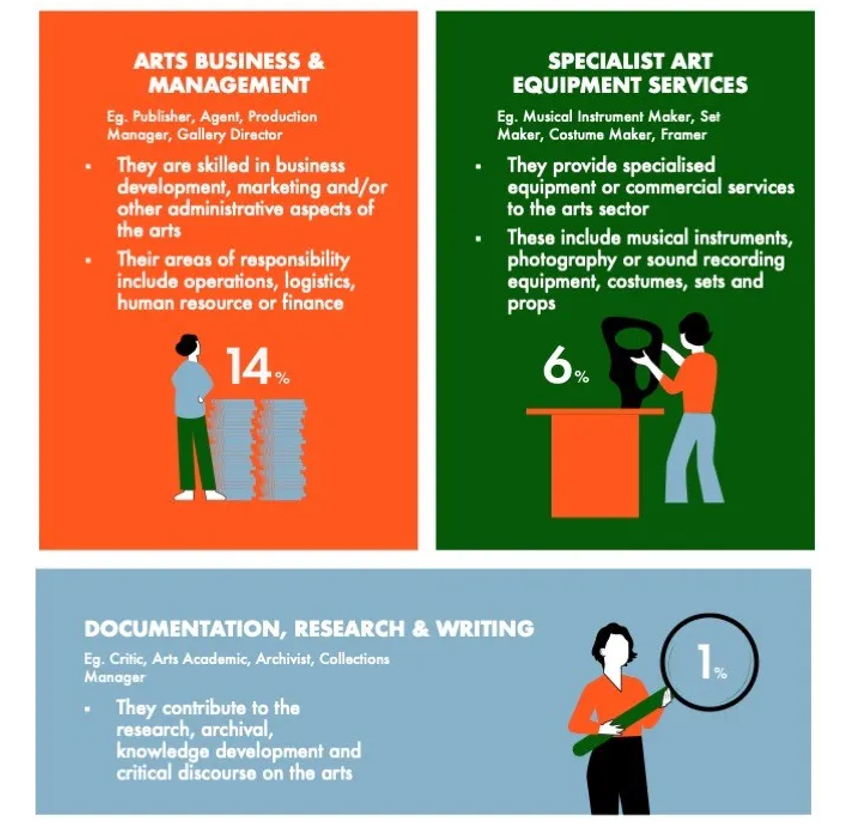
There are some 19,000 professionals in Singapore's Art Industry
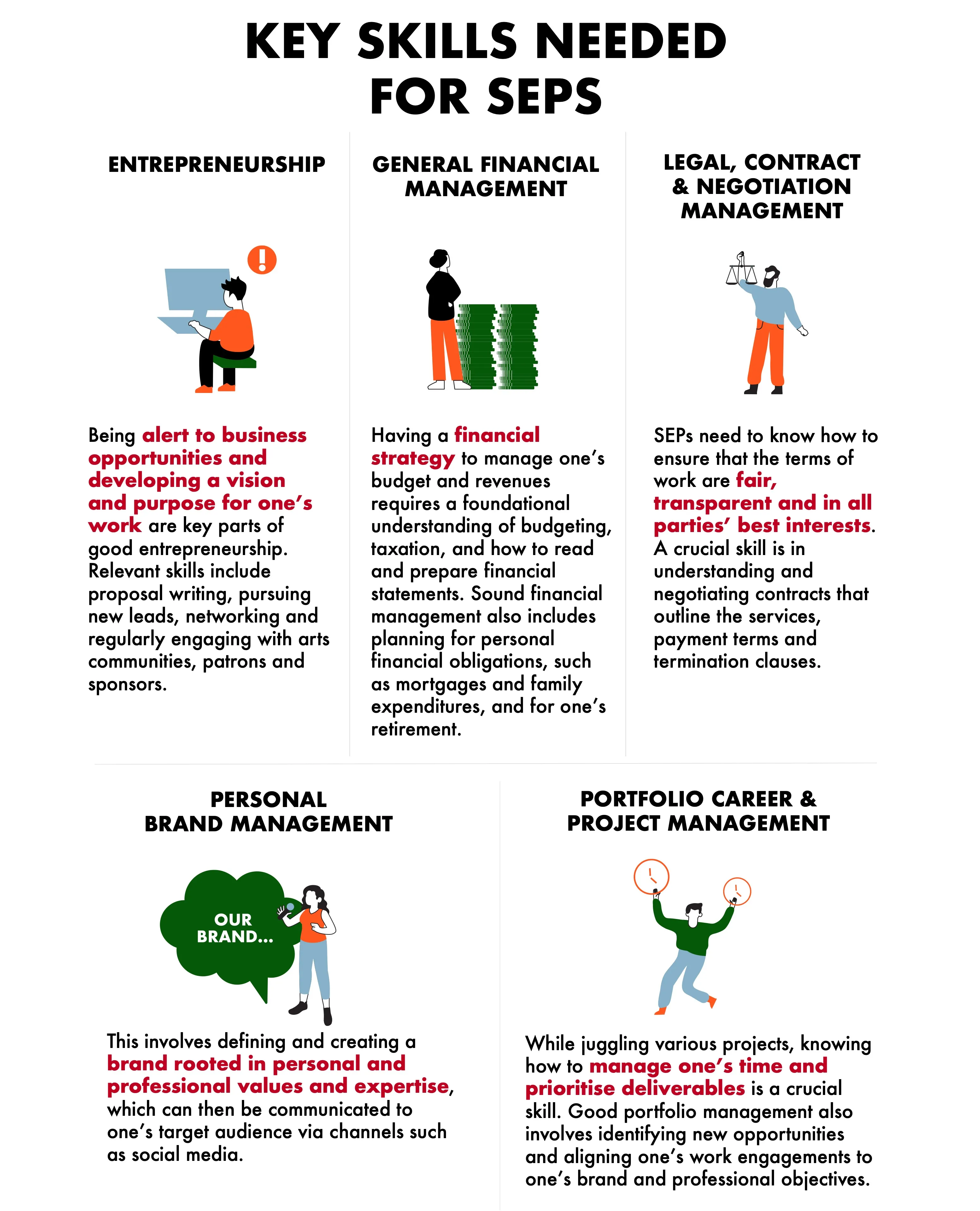
What key skills would Self-Employed Persons need?
Self-Employed Persons (SEPs) operate as mini-enterprises and would need unique skillsets to help them manage their own business.
They need to be self-starters and have enterprising skills and attitudes to succeed.
Competence in business operations such as finance, and branding is also critical.
Basic legal knowledge, including contract negotiation, is also needed to protect their work and rights.
SEPs must adapt to changes and new market segments to have sustainable careers.
This makes upskilling — by continuing to learn new skills and refining existing ones — crucial to help SEPs remain competitive and relevant.
For more information upskilling, check out our resource pages on Skills Framework for the Arts, as well as Jobs & Skills Insights for Arts Professionals
Join our Telegram Channel at t.me/artsresourcehub (opens in new tab) for on-the-go updates on professional development opportunities!